

There are so many pet supplements on the market that claim they are clinically proven or can treat all sorts of conditions in your pet. It’s hard to know which genuinely are proven, with real, solid science behind them, and which aren’t. Especially if you don’t have a scientific background.
To help you understand what our clinical trials show and to help you compare with other products and the evidence they present, we have stripped out the scientific jargon and created a series of “science basics”—clear breakdowns of each of our trials. We look at what was studied, the results, and what that means for your pet. You can read them all here.
But first, it’s important to be able to understand what clinical trials are and how you can tell if a trial is any good. This is your beginner’s guide to understanding clinical studies.
Why are clinical trials of supplements important?
In many countries across the world, the manufacture and distribution of supplements for pet health are not regulated or controlled.
Clinical trials enable us to understand if, how and why a supplement or drug is likely to work. They help us to evaluate their safety and efficacy, as well as comparing them to others.
We believe that our products should do what they say they are going to do, and that is why we conduct internal studies and encourage external clinical trials on our products to prove their efficacy and safety. All known clinical work conducted on our products is published here at www.antinolstudies.com.
How do you know if a clinical trial is good or not?
To evaluate as an owner if a clinical trial is good, it is helpful to use the Hierarchy of Evidence as seen below. The tip of the pyramid shows the best value and best quality data and study type. The bottom of the pyramid shows the least valuable information.
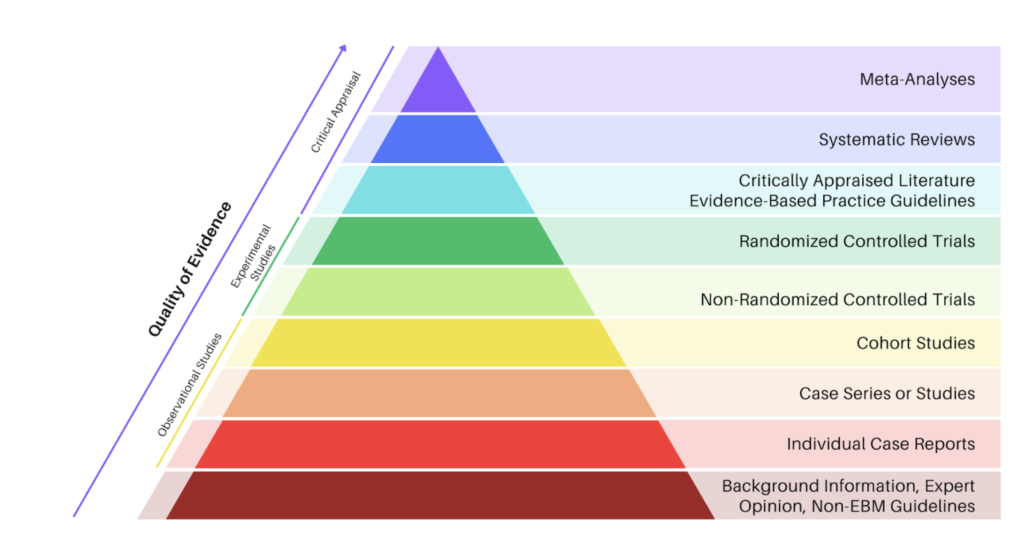
Studies on Antinol (PCSO-524) and Antinol Rapid (EAB-277) fall in the green category of “Randomised Clinical Trials” and the orange category of “Case Studies”.
We would be unlikely to have studies that meet the higher tier of the pyramid as these studies are usually conducted by external bodies, such as universities, who review not just one piece of clinical work but a whole plethora to analyse the science behind a whole topic. An example of this is the recent meta-analysis conducted on nutraceuticals for canine and feline osteoarthritis conducted by the University of Montreal, which you can access here. Some of our studies were used in this meta-analysis, which we are extremely proud of.
Published and peer-reviewed? Is that important?
In order for the value of a clinical trial to be properly evaluated, the science needs to be published.
This doesn’t mean just posting your study on your website, although that is useful for consumers. To be published, the study must have been submitted to a scientific or medical journal and undergone a “peer-review” process.
What is peer-review?
If a study is published in a medical journal, as many of our studies are, it will have undergone a rigorous peer-review process. This means that a panel of experts in their field have read, appraised, and made comments on the study.
If you’re lucky, they’ll approve it for publishing straight away, but most studies go through a long and complex review process. The reviewers ask a whole raft of questions to ensure all the points are fully explained and made clear in the report, and any doubts about the results or conclusions are ironed out
What about “data on file”?
When looking at the scientific evidence for supplements, you will often come across the phrase “data on file”.
This means that the company is withholding their information from publication, and it has not been fully evaluated, it won’t have been peer reviewed and it can never be appraised as part of a meta-analysis – if you remember meta-analysis are the creme de la creme of scientific papers.
Are all of your studies peer-reviewed and published?
Yes, our most important studies, the ones that show the efficacy and safety of our products, are peer-reviewed and published in the scientific literature. Anyone can read them and see how effective our products are. In fact, you can read them all here.
In addition to our peer-reviewed studies, you will also find a number of case studies and studies that have been presented at scientific conferences. All of which add to the body of scientific evidence that supports our products so that they can support your pets. Case studies can also be useful initial starting positions, if there are positive results in a small group then it is worth investing in exploring this further.
You can access a basic breakdown of all of our studies, and their full, published versions at www.antinolstudies.com.