

In this robust clinical study, sixty-six pet dogs with shoulder or hip OA (osteoarthritis) were given one of two treatments: PCSO-524 (an oil extract of green-lipped mussel), or Fish Oil, orally for 24 weeks. Researchers assessed their ability to put weight on their painful limbs, how well they could move their joints and they were all clinically assessed by a vet to give them an OA score.
Researchers also took blood samples and measured a biomarker (WF6), which shows the level of cartilage breakdown in the joint and, therefore, indicates the progression of the disease.
The dogs’ lameness scores, weight-bearing ability, and joint range of motions all improved significantly in the dogs who were given PCSO-524, and they significantly improved when compared to the fish oil group.
The levels of OA biomarker also decreased in the PCSO-524 group, suggesting that cartilage breakdown was reduced and the disease was progressing more slowly.
Ultimately, we give supplements to our dogs to help them feel more comfortable and improve their mobility and quality of life. This study suggested that if your aim is to do this for your dog, PCSO-524 would be a better supplement choice than fish oil.
Why was this study done?
Osteoarthritis (OA) is one of the most common conditions treated by small animal veterinarians. Estimates suggest that the prevalence of osteoarthritis in dogs increases from 15% to 67% as they age, and it’s seen in 20% of dogs one year and over. It is also a leading reason for premature euthanasia.
Veterinarians prefer to use a multi-modal approach to managing the disease—meaning they use various treatment options together, with the overall aim of reducing pain and preventing the disease from progressing.
One of the most popular treatment options is neutraceuticals (supplements), particularly those containing omega-3 polyunsaturated fatty acids, with a focus on EPA, DHA, and ETA. In previous studies, Green-Lipped Mussel oil extract (GLM) and fish oils have shown the potential to reduce pain and increase joint mobility thanks to their anti-inflammatory effects.
When researchers have looked at the impact of OA treatments previously, the focus has mostly been on the impact on the dog’s ability to use their limbs and their pain scores. However, there is a growing interest in osteoarthritis biomarkers in disease progression. Biomarkers are molecules found in the blood, other bodily fluids, and tissues that indicate normal or abnormal processes related to a condition or disease. Tracking the amount of these biomarkers helps to understand how the dog is doing and helps predict the progression of the disease.
What did we expect to find?
Read our explanation of what makes a good study here first.
Both fish oils and green-lipped mussels oil extract have some evidence to suggest they can help dogs with osteoarthritis; the researchers wanted to compare their effects. They were particularly investigating the impact of PCSO-524, an extract of green-lipped mussels, on the OA biomarker levels and the weight-bearing abilities of dogs with shoulder and hip OA compared to those treated with fish oil.
Where does the study fit into the hierarchy of evidence?
Not sure what the hierarchy of evidence is? Check out the clinical studies basics here.
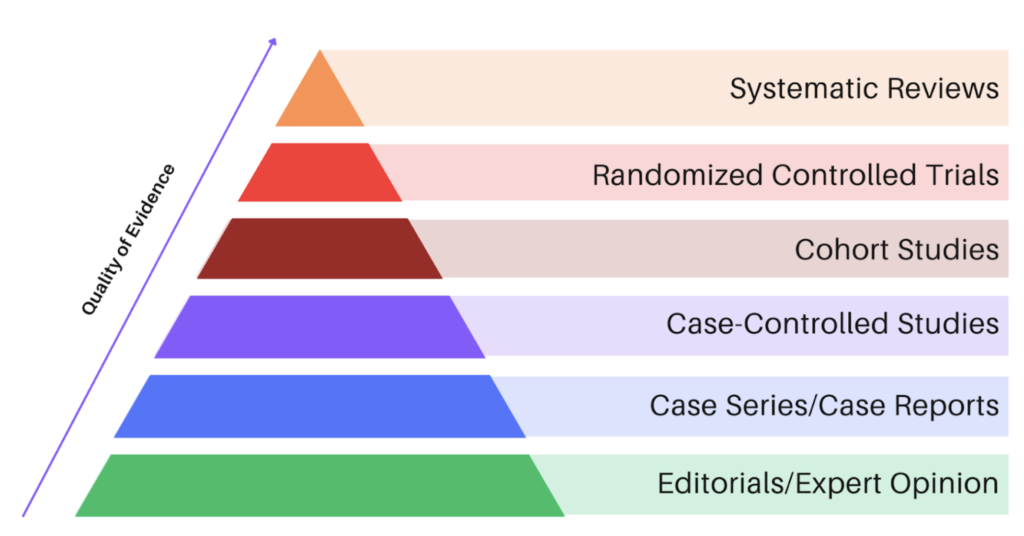
Figure 1. Hierarchy of evidence
This was a randomized, single-blinded clinical trial. It sits in the red zone of the hierarchy of evidence, which is generally considered to be a study of robust design, particularly useful for primary trials looking at treatment or prevention of conditions.
The study was single-blinded, which means that the researchers who evaluated the dogs’ condition didn’t know which treatment they had been given.
It was also randomized, which splits the trial dogs into equal-sized test groups, reducing the risk of bias, which could skew clinical results. In this case, there were 66 dogs split into two groups. In both groups, most dogs had hip OA, with a small number of shoulder OA cases.
This study had no placebo group for comparison, which is a limitation. In this case, it is a straightforward comparison of PCSO-524 against fish oil.
How was the study set up?
Sixty-six pet dogs with hip or shoulder OA (osteoarthritis) were randomly assigned to one of two test groups.
To ensure the dog’s base nutrition was the same across all animals, they were all fed the same diet for at least two weeks before the study.
The dogs were then either given PCSO-524 at the recommended dosage, once daily, or fish oil at the recommended dosage, twice daily. The dogs were given these supplements for twenty-four weeks.
What was measured?
Before the trials began, blood samples were taken from all of the dogs, and they were each assessed by a vet who didn’t know which group they were assigned to.
The researchers looked at how lame they were, measured how well they could move their joints (range of motion), measured their weight-bearing abilities and did X-rays to support their OA scoring.
Clinical examinations and blood collections were done in weeks two, four, eight, twelve, sixteen, twenty, and twenty-four. Before the trial, and at weeks 12 and 24, blood samples were also analysed to monitor the dogs’ health.
In all of these measures, the researchers are looking for a “statistically significant difference” between the test groups or between day 0 and the following trial times within a group.
If a result is statistically significant, it means that this result isn’t likely to have just occurred by chance. If the result isn’t statistically significant, then you can’t be sure that any difference wasn’t just random.
Primary Assessment Measures
Weight-bearing Ability and Lameness Scores
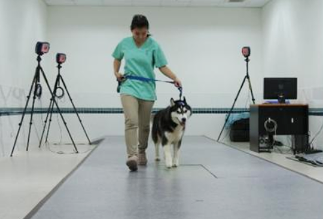
Peak Vertical Force (PVF) helps us understand a dog’s weight-bearing ability. They are trotted for about a metre across a sensor called a force plate, which measures how much of that individual’s body weight they are distributing through each leg.
If a dog has pain in one or more limbs, they may put less weight on the affected limb(s).
The sensors can map their gait (how the dog moves), allowing them to compare their weight-bearing ability before, during, and after treatment.
If the dogs can bear more weight after treatment, it is a good indicator that they are experiencing less pain and have improved mobility.
In this study, clinical assessments were undertaken, along with PVF, to give both an indication of the dog’s weight-bearing ability and its clinical lameness score, which are classified into one of three groups: Improved, Not Improved, or Worsened.
Concentration of OA Biomarkers
In this case, researchers were particularly interested in an OA biomarker known as WF6, which is found in the blood serum. The presence of WF6 in increased levels is an indicator that arthritic changes are present in the joint, and the higher the WF6 concentration, the more severe the condition.
The concentration of WF6 biomarkers was calculated from the blood samples given at each test interval.
Joint Range of Motion
A joint’s range of motion is a measure of how much can a limb be bent or stretched out? We expect dogs with OA to have stiffer joints and a reduced range of motion compared with normal dogs. An increase in a dog’s joint range of motion is an indicator of improved mobility and comfort.
Secondary Assessment Measure
Haematology and blood chemistry
Blood samples were taken from each dog at all time points. No major changes in blood chemistry were expected. However, this is a good measure to ensure the animals stay healthy during the trial.
Before the trial, and at weeks 12 and 24, a routine coagulation screening test was also done. Omega-3s have some natural anti-coagulant properties, so it was important to check that the dog’s blood clotting abilities had not been reduced during the trial.
What were the results?
- Haematology and blood chemistry
Let’s start with the general health overview. Overall, as expected, none of the blood chemistry results changed significantly across the trial period, and there were no changes in the blood clotting rates.
- OA Biomarkers
At the start of the trial, the levels of WF6 were not significantly different between the two groups, giving a good baseline to start from.
In the PCSO-524 test group, the serum WF6 levels reduced throughout the trial compared to day one and were significantly different from day one on weeks 2, 4, 8, 12, 16, 20, and 24.
In the fish oil group, it was a different story. On weeks 8 and 20, the WF6 levels were significantly higher than on day one and there was no significant difference between day one and the end of the trial.
There was a significant difference in the WF6 levels between the PCSO-524 and fish oil groups at the end of the trial
- Weight-bearing ability
When comparing day 0 to all the other test weeks, the PCSO-524 group showed a statistically significant improvement in weight-bearing scores in both hip and shoulder OA.
In the fish oil group, there was no significant improvement in hip joint weight-bearing ability throughout the trial, and there was no improvement in the shoulder joint until week 12.
There was a statistically significant difference between the PCSO-524 and fish oil groups after week 2.
- Range of motion
Joint range of motion significantly improved across all trial times in the PCSO-524 group in terms of joint flexion and extension of both the shoulder and hip joint.
In the fish oil group, there was also an improvement in joint range of motion, but this wasn’t statistically significant until week 16.
What do these results mean for my dog?
This study compared the effects of PCSO-524 and fish oil in the treatment of osteoarthritis in dogs.
In all cases, the results suggest that PCSO-524 has a better clinical effect on the dogs than fish oil.
The dogs taking PCSO-524 could bear more weight on their affected limbs than before the study. This suggests that they are experiencing a reduction in the pain associated with OA, so your arthritic dog may feel more comfortable using this supplement.
These results were backed up by an improvement in their joint range of motion. If your dog is able to move its limbs more freely it is an indicator that they are more comfortable and experiencing reduced stiffness. The clinical assessment score from the veterinarian also suggests the same, with over 80% of the dogs showing an improvement, compared to only 30% in the fish oil group.
When looking at the OA biomarkers, the PCSO-524 group showed a significant decrease. This suggests that the progress of OA is being slowed. The disease isn’t progressing as quickly with PCSO-524 than without, potentially meaning that your dog is more mobile for longer.
The same can’t be said for the fish oil group, where cartilage degradation, indicated by WF6 continued to occur.
The researchers are very positive about the results of this study, but they recognise that further work needs to be done to investigate the effect of PCSO-524 on disease progression.
The ultimate goal of a nutraceutical for your dog is to allow them to feel comfortable and move about more freely. If that supplement can also slow the progress of your dog’s OA, it is undoubtedly an option to consider. This study suggests that PCDO-524 can do all of these things for your dog, and if you are choosing between PCSO-524 and fish oil, you are likely to see a greater improvement in your dog with PCSO-524.
If you would like to read the full scientific study, you can download it here.