

The quick rundown
In this robust clinical study, forty pet dogs with hip or stifle OA (osteoarthritis) were given one of four treatment options: Carprofen (NSAID), PCSO-524, Carprofen + PCSO-524, or Glucosamine-chondroitin sulphate and avocado/soybean unsaponifiables (GC-ASU), orally for four weeks. Researchers assessed their ability to put weight on their painful limbs before treatment and every two weeks. They also measured indicators of kidney health throughout the trial.
After two weeks, all groups except for the GC-ASU group were able to put significantly more weight on their arthritic limbs than before the treatments, suggesting they were all experiencing less pain than before the trial. This trend continued throughout the trial period.
The combination of PCSO-524 and Carprofen improved the dog’s mobility the most because the two treatments work together along similar biological pathways.
Improvements in the mobility of dogs receiving just PCSO-524 gives vets a new option for inflammatory and pain management in cases where NSAIDs aren’t appropriate.
Why was this study done?
Osteoarthritis (OA) is one of the most common conditions treated by small animal veterinarians. Estimates suggest that 80% of dogs aged 8+ have OA, and it’s seen in 20% of dogs one year old and over. It is also a leading reason for premature euthanasia.
The most common drug group used to treat pain in OA cases is a non-steroidal anti-inflammatory drug (NSAID). Although considered effective, NSAIDs may cause digestive problems and may not be suitable for dogs with certain other conditions, such as kidney disease.
Disease modifying osteoarthritis agents (DMOAAs) such as marine-based fatty acid compound PCSO-524, glucosamine and chondroitin sulfate (GC), and avocado soybean unsaponifiable (ASU) have all been demonstrated to have the potential to reduce joint inflammation and slow cartilage degradation, but their use as a treatment is controversial. Previous researchers recommended further investigation.
What did we expect to find?
Read our explanation of what makes a good study here first.
Both Carprofen (the NSAID of choice in this study) and PCSO-524 (the active ingredient in Antinol) have been shown to have an anti-inflammatory effect in cases of OA. Researchers wanted to investigate the therapeutic effect of Carprofen and PCSO-524 in dogs with osteoarthritis. They predicted that combining the two treatments would result in a better outcome for the dogs than using either individually or using the other DMOAAs.
Where does the study fit into the hierarchy of evidence?
Not sure what the hierarchy of evidence is? Check out the clinical studies basics here.
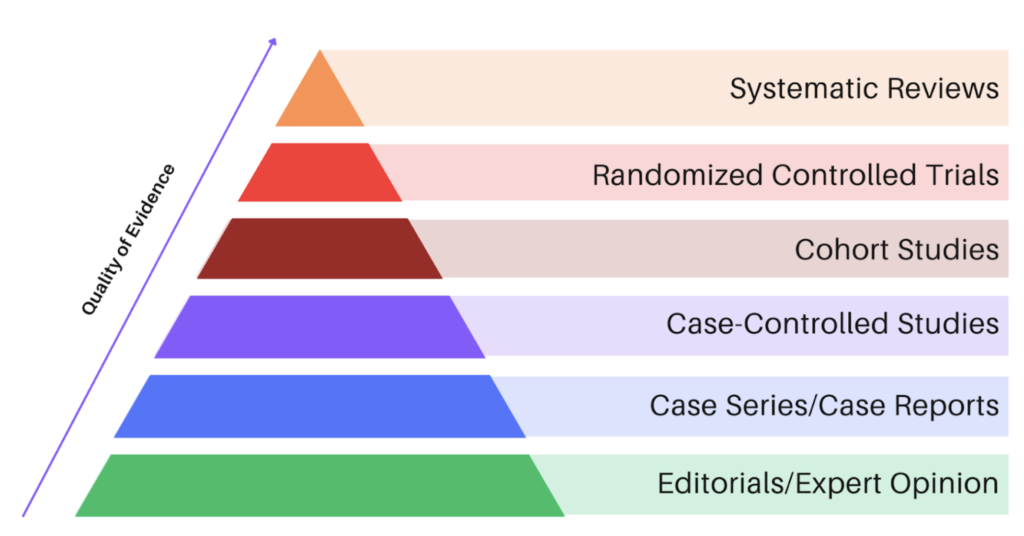
Figure 1. Hierarchy of evidence
This was a prospective, block-randomized, single-blinded clinical trial. It sits in the red zone of the hierarchy of evidence, which is generally considered to be a study of robust design, particularly useful for primary trials looking at treatment or prevention of conditions.
The study was single-blinded, which means that the researchers who evaluated the dogs’ condition didn’t know which treatment they had been given, although the owners were aware.
It was also block-randomized, which splits the trial dogs into equal-sized test groups, reducing the risk of bias, which could skew clinical results. In this case, the severity of OA was used as a “blocking factor”, which ensured there was an even split of OA severity throughout the test groups.
This study had no placebo group for comparison, which is a limitation noted by the researchers, who recommended that future studies have a placebo group to compare with.
How was the study set up?
Forty pet dogs with hip or stifle OA (osteoarthritis) were classified into two groups of OA severity based on veterinary examinations:
- Mild/moderate.
- Severe.
These groups were used to randomly assign the dogs to four test groups; each group had equal numbers of mild/moderate and severe OA dogs.
The groups were then given either PCSO-524, Carprofen, Carprofen PLUS PCSO-524, or Glucosamine-chondroitin sulphate and avocado/soybean unsaponifiables (GC-ASU), orally for four weeks.
Before the study, dogs had to stop any pain medication and supplements for a set time, depending on the type of drug they had been receiving.
What was measured?
The dogs were assessed three times throughout the study: once before the trial and at weeks two and four of treatment.
Primary Assessment Measures
- Peak Vertical Force
Peak Vertical Force (PVF) helps us understand a dog’s weight-bearing ability. They are trotted for about a metre across a sensor called a force plate, which measures how much of that individual’s body weight they are distributing through each leg.
If a dog has pain in one or more limbs, they may put less weight on the affected limb(s).
The sensors can map their gait (how the dog moves), allowing them to compare their weight-bearing ability before, during, and after treatment.
If the dogs can bear more weight after treatment it is a good indicator that they are experiencing less pain and improved mobility.
- Orthopaedic Assessment Score
An Orthopaedic Assessment Score (OAS) measures the pet’s pain and mobility during a clinical examination.
In this case, it was assessed at the veterinary hospital. This study considered the severity of each dog’s lameness, the range of motion of their joints (how far they can move them), pain on touching the affected area, and their ability to bear weight.
Secondary Assessment Measure
- Haematology and blood chemistry
Blood samples were taken from each dog at all three time points. No major changes were expected in terms of blood chemistry. However, this is a good measure to ensure the animals stay healthy during the trial. Changes to BUN and Creatinine may be seen in the Carprofen groups, as this is a common side effect of NSAIDs. Long-term NSAID usage has been shown to negatively impact kidney health. These measures will give an indication of how well the kidneys are coping with these treatments.
What were the results?
The PSCO-524, Carprofen, and combination groups all showed significant improvements in their peak vertical forces and Orthopaedic assessment scores. This suggests that the dogs undergoing these treatments were able to bear more weight on their sore limbs and experienced reduced pain compared to before treatment.
Week 2
At week 2, all groups except the GC-ASU group showed a statistically significant increase in PVF, meaning they were bearing more weight on their limbs than before the trial. At this stage, there was no significant change to the orthopaedic assessment scores in any group. When comparing the adjusted PVF scores, the PCSO-524 and combination groups improved the most compared to the pre-trial.
Week 4
By week 4, all groups, except the GC-ASU group, showed a statistically significant increase in PVF and a statistically significant improvement in orthopaedic assessment scores compared to their pre-trial results. The GC-ASU group did show an improved peak vertical force; however, it wasn’t statistically significant, which means researchers can’t be confident that the result didn’t happen by chance.
When comparing the adjusted PVF scores to the pre-trial, the combination group improved the most, which may indicate a beneficial effect of using Carprofen and PCSO-524 together.
Across all weeks, BUN levels were increased in the Carprofen group. No other significant changes were found.
What do these results mean for my dog?
All groups except for the GC-ASU group showed significant improvements in PVF from the baseline after 2 and 4 weeks. This means that the dogs in the study could bear more weight on their legs than before treatment. This suggests that they are experiencing a reduction in the pain associated with OA, so your arthritic dog may feel more comfortable using any of these treatments.
These results were backed up by a decrease in orthopaedic assessment scores in the same three groups, suggesting an improvement in the dogs’ mobility and comfort levels and, ultimately, quality of life.
There were some improvements in the GC-ASU scores, but these weren’t significant. This may be because the dose was too low or the trial period was too short. So, if you are giving this to your dog, check how much you are giving it and ensure you give it a long trial period before deciding if it has made a difference to your dog.
Both Carprofen and PCSO-524 act on similar biological pathways within your dog’s body to reduce joint inflammation. The combination group showed a greater improvement in peak vertical forces than the other groups. This suggests that when combined, the NSAID and PCSO-524 are working in synergy with each other to produce a greater clinical effect than when used separately.
When treating osteoarthritis, a “multi-modal” treatment plan is recommended. This means using a combination of methods for the best clinical outcome for your dog. This might include medication, weight loss, an exercise plan, and physiotherapy, for example. The results of this study suggest that you could also combine PCSO-524 with Carprofen in your multi-modal plan to help reduce inflammation, improve mobility, and reduce joint pain.
The final changes of note relate to the BUN increases in the Carprofen group. This is consistent with side effects related to NSAID use, and although not considered harmful at these levels, it is something to consider if your dog is older or has a known kidney condition.
The goal of OA treatment in your dog is to reduce pain and inflammation, allowing your dog to feel more comfortable and move about more freely. The results of this study indicate that although both Carprofen and PCSO-524 show clinical improvements in OA symptoms, using them together had the best outcome for the dogs in the study. And where NSAIDs aren’t suitable, PCSO-524 alone could improve your dog’s mobility.
If you would like to read the full scientific study, you can download it here.