

The quick rundown
In this robust clinical study, seventy-nine pet dogs with hip or stifle OA (osteoarthritis) were given one of three treatment options: Firocoxib (NSAID) + Placebo, PCSO-524 + Placebo, or Firocoxib + PCSO-524, orally for four weeks. Researchers assessed their ability to put weight on their painful limbs before treatment and every two weeks. They also measured indicators of inflammation (PGE2) throughout the trial.
After two weeks, all groups could put more weight on their arthritic limbs than before the treatments, suggesting they were all experiencing less pain than before the trial. This trend continued throughout the trial.
Inflammatory markers were reduced during the trial, with the group on the combined treatment showing the greatest improvement. This suggests that all treatments, including PCSO-524, reduced inflammation. The combination of PCSO-524 and Firocoxib improved the most because the two treatments work together along similar biological pathways.
Improvements in the mobility of dogs receiving just PCSO-524 give vets a new option for inflammatory and pain management in cases where NSAIDs aren’t appropriate.
Why was this study done?
Osteoarthritis (OA) is one of the most common conditions treated by small animal veterinarians. Estimates suggest that 80% of dogs aged 8+ have OA, and it’s seen in 20% of dogs one-year-old and over. It is also a leading reason for premature euthanasia.
The most common drug group used to treat pain in OA cases is a non-steroidal anti-inflammatory drug (NSAID). Although considered effective, NSAIDs may cause digestive problems and may not be suitable for dogs with certain other conditions, such as kidney disease.
Both Firocoxib (the NSAID of choice in this study) and PCSO-524 (the active ingredient in Antinol) have been shown to have an anti-inflammatory effect in cases of OA. A previous study suggested that because NSAIDs and PCSO-524 influence similar inflammatory pathways, they may have an increased therapeutic effect together, compared to separately. The researchers advised further investigation.
In this study, researchers followed on from that and compared the weight-bearing ability of dogs with OA in 3 treatment groups: Firocoxib, PCSO-524, and a combination of the two. If the results showed that dogs had a better outcome with a combination of the two substances or that PCSO-524 delivered similar results to NSAIDS, it would give vets another tool when treating their patients—improving their available pain relief and providing a new option when NSAIDs aren’t appropriate.
What did we expect to find?
It was predicted that the study would find both treatments effective at treating OA symptoms but that a combination of the two would result in an even greater therapeutic effect with even better weight-bearing capabilities in dogs with osteoarthritis.
Where does the study fit into the hierarchy of evidence?
Not sure what the hierarchy of evidence is? Check out the clinical studies basics here.
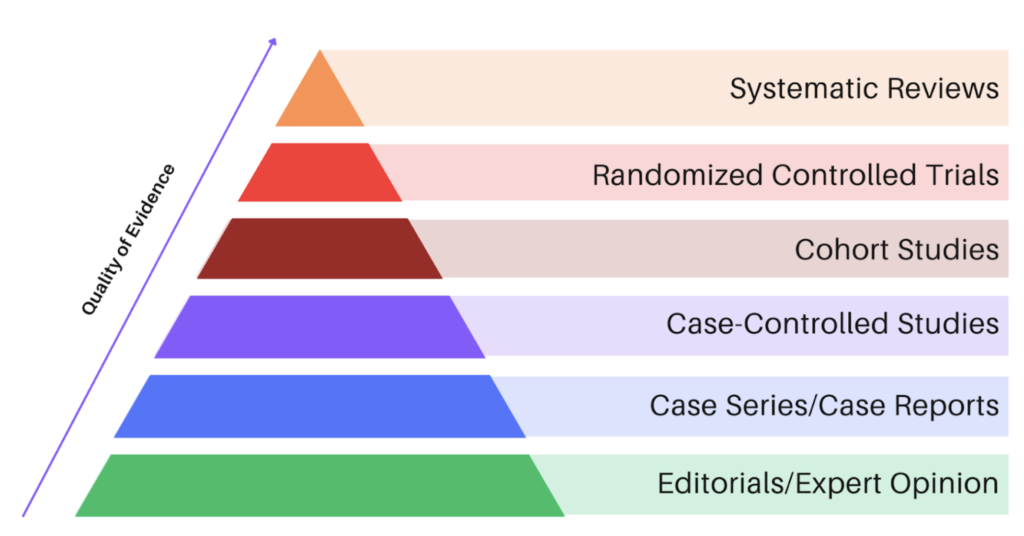
Figure 1. Hierarchy of evidence
This was a prospective, block-randomized, double-blinded clinical trial. It sits in the red zone of the hierarchy of evidence, which is generally considered to be a study of robust design, particularly useful for primary trials looking at treatment or prevention of conditions.
The study was double-blinded, which means neither the owner nor the veterinary team knew which owner and dog team had been given which drug, supplement or combination.
It was also block-randomized, which splits the trial dogs into equal-sized test groups, reducing the risk of bias, which could skew clinical results.
This study had no placebo group for comparison, which is a limitation noted by the researchers, who recommended that future studies have a placebo group to compare with. However, each group had two things to give to the dogs: the test substance plus a placebo instead of the other substance, where required. The placebo was designed to look the same as the substance it was replacing.
How was the study set up?
Seventy-nine owned pet dogs with hip or stifle OA (osteoarthritis) were first classified into two groups of OA severity based on veterinary examination.
- Mild/moderate.
- Severe.
These groups were used in the randomization process to make sure each test group had an equally distributed severity of OA.
The dogs were then randomly assigned to three treatment groups and given either Firocoxib + Placebo, PCSO-524 + Placebo, or Firocoxib + PCSO-524 orally for four weeks.
Peak vertical force (PVF) and subjective orthopaedic assessment scores (OAS) were evaluated before treatment (week 0) and at weeks 2 and 4 during treatment. At these times, researchers also measured Canine Brief Pain Inventory Scores (CBPI), and blood tests were done to look at serum prostaglandin E2 concentration, haematology, and blood chemistry values. We explain what these all mean below.
Before the study, dogs taking part were required to stop any pain medication and supplements for a set time, depending on the type of drug they had been receiving.
What was measured?
Primary Assessment Measures
These measures are the main focus of the study and will give us the most information on the impact of the treatments on the dogs.
Peak Vertical Force
Peak Vertical Force (PVF) helps us understand a dog’s weight-bearing ability. They are trotted for about a metre across a sensor called a force plate, which measures how much of that individual’s body weight they are distributing through each leg.
If a dog has pain in one or more limbs, they may put less weight on the affected limb(s).
The sensors can map their gait (how the dog moves), allowing them to compare their weight-bearing ability before, during, and after treatment.
If the dogs can bear more weight after treatment, it is a good indicator that they are experiencing less pain and have improved mobility.
Orthopaedic Assessment Score
An Orthopaedic Assessment Score (OAS) measures the pet’s pain and mobility after clinical examination and may also consider the owner’s opinion.
In this case, it was assessed at the veterinary hospital. This study considered the severity of each dog’s lameness, the range of motion of their joints (how far they can move them), pain on touching the affected area, their ability to bear weight, and their overall clinical condition.
Secondary Assessment Measures
These are supplementary measures. The researchers don’t expect to see huge changes here, but they add additional information that may back up the primary findings.
Canine Brief Pain Inventory Score
This is a questionnaire undertaken by the owners and assessed by a veterinarian to rate the degree of pain they believe their dog is in. It should be noted that this is a standard questionnaire, but in this case, it was translated into Thai for the owners. The researchers noted that the translation may have removed some of the context of the questions, making it more difficult for owners to follow.
Serum PGE2 concentration
The PGE2 (Prostaglandin E2) is released when there is inflammation in the body. OA is an inflammatory condition, so we expect there to be higher than normal PGE2 levels. The samples are taken to see if any treatments reduce this.
Haematology and blood chemistry
No major changes were expected in terms of blood chemistry. However, it is a good measure to ensure the animals stay healthy during the trial. Changes to BUN and Creatinine may be seen in the Firocoxib groups, as is it a common side effect of NSAIDs.
What were the results?
Week 2
At week 2, all three groups showed a statistically significant increase in PVF. Meaning they were bearing more weight on their limbs than before the trial. There was a significant decrease in PGE2 levels in the combination treatment group but not in the other two.
Week 4
By week 4, all three groups continued to show a significant improvement in PVF when compared to their pre-trial results and PGE2 levels were also significantly improved in the combination group.
Across all weeks, BUN and Creatinine levels were increased in both the Firocoxib and combination groups. No other significant changes were found.
What do these results mean for my dog?
All three groups showed significant improvements in PVF from the baseline after 2 and 4 weeks. This means that the dogs in the study could bear more weight in their legs than before treatment. This suggests that they are experiencing a reduction in the pain associated with OA, so your arthritic dog may feel more comfortable using any of these treatments.
The numerical change in PVF in the combination group was bigger than in the other groups, which suggests that when Firocoxib and PCSO-524 are combined, the clinical effect is greater than when they are used separately.
This is also indicated in the PGE2 results, with greater improvements in the PGE2 levels in the combined group. PGE2 is a measure of inflammation. Both NSAIDs and PCSO-524 are known to work on similar biological pathways to reduce inflammation. These results suggest that when combined, they have an additive effect, working together in synergy to alleviate joint pain and inflammation. So, if you combine your dog’s NSAIDs with PCSO-524 supplements, you may see a bigger improvement in their mobility and pain than if they just took one or the other.
The final changes of note relate to the BUN, and Creatinine increases in the Firocoxib and combination groups. This raise suggests the kidneys are working harder and it’s having a negative effect on them. This fits with the known side effects related to NSAID use, and although not considered harmful at these levels, it is something to consider if your dog is older or has a known kidney condition.
The goal of OA treatment in your dog is to reduce pain and inflammation, allowing your dog to feel more comfortable and move about more freely. The results of this study indicate that although both Firocoxib and PCSO-524 show clinical improvements in OA symptoms, a multi-modal approach, using them together, had the best outcome for the dogs in the study. And where NSAIDs aren’t suitable, PCSO-524 alone improves the dogs’ mobility.
If you would like to read the full scientific study, you can download it here.