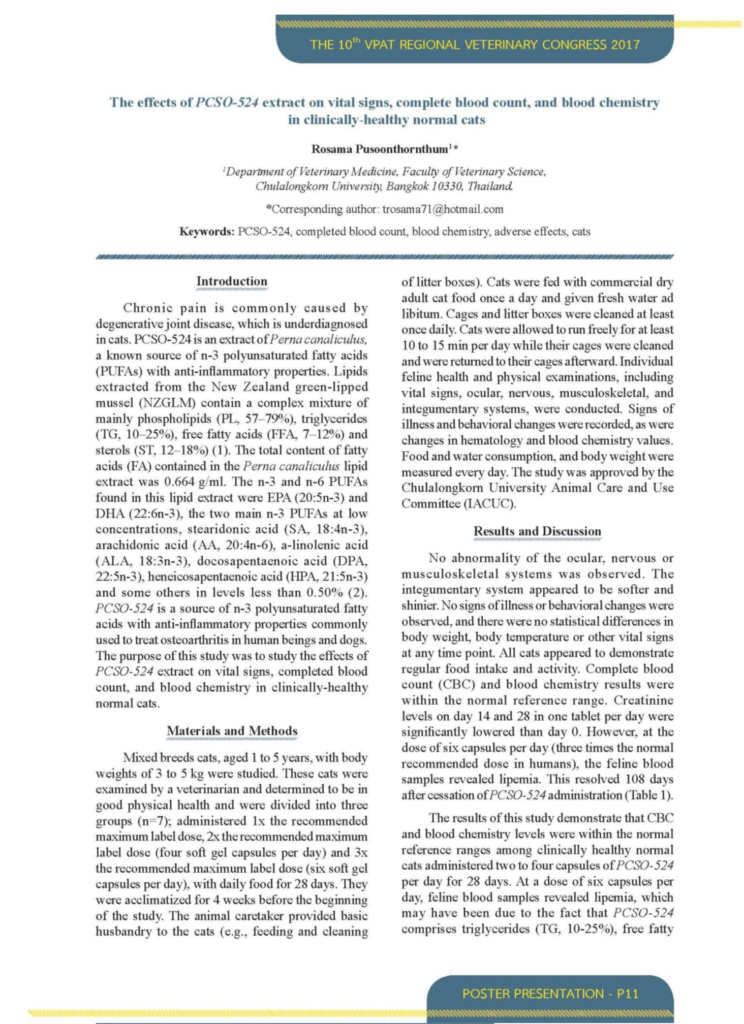

In this preliminary study, seven cats were fed an identical diet and given one of three treatment options to test the safety of the study substance PCSO-524 (Antinol), a joint, skin and wellness supplement for cats. Researchers gave the cats either the recommended dose of PCSO-524, 2 times the recommended dose, or 3 times the recommended dose, for 28 days.
Various parameters were assessed to give an overall picture of their health and identify any body systems being affected by the trial substances. Any behavioral changes were also recorded.
All parameters remained within the normal range in both the recommended dose group and the 2 x recommended group throughout the trial. In the 3 x recommended dose group, there were signs of increased fat molecules in the blood which may be due to the high levels of these they were receiving from their high dosage.
The trial’s results suggest that Antinol is a safe supplement for cats, even at twice the maximum recommended dosage.
Why was this study done?
The animal supplement industry is not as highly regulated and controlled as the medicines industry, and manufacturers are not under such strict rules to prove that their products work or that they are safe for the species they are recommended for.
In many cases, supplement manufacturers use research on similar substances to back up their claims, or the research might have been done in a different species from the one they are recommending it for. For example, the dosages of a supplement may be tested in rats and assumed to be safe, but they are never tested in the dogs or cats that the supplement is being recommended for. This isn’t always a safe practice, as different species may react differently to the same substance.
Here at Vetz Petz, we believe that claims about supplements should only be made if they can be substantiated. We also believe that safety studies should be done in the species for which our supplements are intended rather than extrapolating from other species.
Antinol and its fatty acid blend have undergone rigorous testing. It has been shown to have an anti-inflammatory effect, supporting many aspects of pets’ health, including skin, joint, and brain health. Antinol has the potential to help thousands of pets feel more comfortable, but first, the researchers wanted to demonstrate its safety.
So, this preliminary study was undertaken to ensure the safety of Antinol for cats when given at and above the recommended dosage. This study was done under strict ethical review and conditions, overseen by qualified veterinarians.
What did we expect to find?
Read our explanation of what makes a good study here first.
This was an evaluation study looking at the effect and potential side effects of Antinol at various doses. Studies had already been done in dogs, which showed no negative side effects, and others had also done a previous study on children using a similar supplement.
It was hypothesized that cats would have no significant side effects when given Antinol at its recommended dosage.
Where does the study fit into the hierarchy of evidence?
Not sure what the hierarchy of evidence is? Check out the clinical studies basics here.
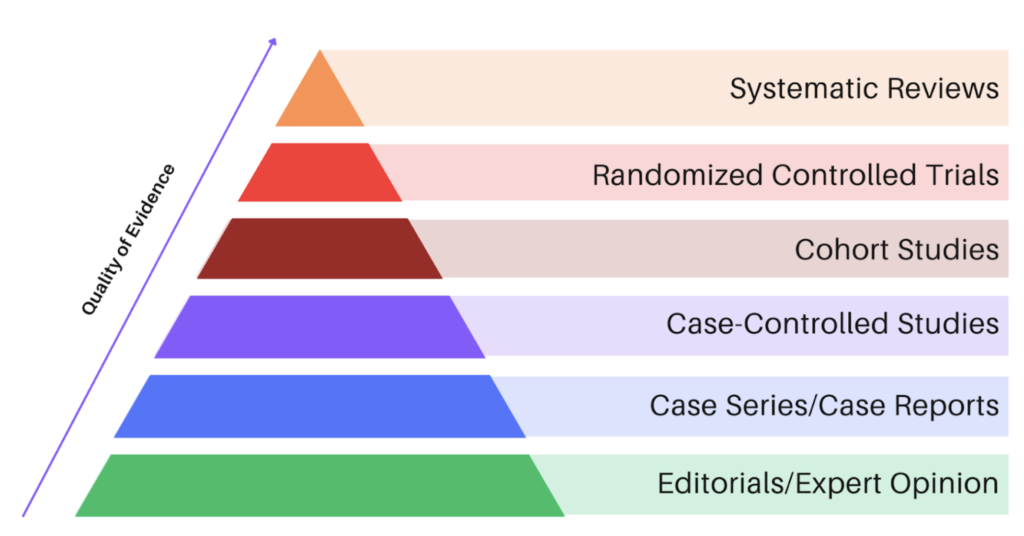
Figure 1. Hierarchy of evidence
This is a preliminary study, so it doesn’t go into the detail of a full, controlled study. It sits at the bottom of the red zone in the hierarchy of evidence. It isn’t placebo-controlled, nor is it a blinded study, so the researchers knew which cats had which dosage.
Although this study doesn’t go into the detail that some of our other studies do, it achieved its aim of demonstrating the safety of Antinol in cats.
How was the study set up?
Seven healthy mixed-breed cats, aged between 1 and 5, were randomly assigned to one of 3 groups.
Before the study, all cats were examined by a vet to ensure they were in good health. They were kept in identical conditions and were all fed the same commercial diet calculated by body weight.
- Supplement groups.
The recommended maximum dose of Antinol was 2 capsules per day. This study intended to test the safety of dosage over the recommended, over a 28 day period. So, the three groups were assigned one of the following treatment options:
- Basal diet PLUS 2 capsules – 1x maximum recommended dose per day
- Basal diet PLUS 4 capsules – 2 x maximum recommended dose per day
- Basal diet PLUS 6 capsules – 3 x maximum recommended dose per day.
What was measured?
Before the trial and again at days 14 and 28, the cats were physically examined by a veterinarian. Their vital signs, vision, nervous system, musculoskeletal system, and skin and coat health were all assessed. Any changes in their behavior or signs of illness were recorded. Their blood chemistry and hematology were also assessed at these points and compared to the start of the trial.
Everyday food and water consumption was measured, along with the cat’s weight.
What were the results?
Across all three groups, there were no significant changes in any of the parameters measured during the trial, except for in the highest dosage group, where the cat’s showed some signs of lipemia. This resolved 108 days after the cessation of PCSO-524 administration.
Across all groups there were no abnormalities in their vision, nervous system, or musculoskeletal system.
Their coats were reported to be softer and shinier than at the start of the trial.
There were no changes in the behavior, weight, water or food intake, and no signs of illness were noted.
In terms of blood chemistry and hematology, all measures were within the expected normal range, with two notable differences.
For those cats on the recommended number of capsules, there was a decrease in their creatinine levels.
For those on the highest dosage, there were signs of lipemia in the blood results. This is when there are higher than normal levels of fat molecules in the bloodstream.
What do these results mean for my cat?
Choosing a supplement that is appropriate for your cat can feel like a minefield at the best of times. There are so many options, all with different claims. And when you realize that supplements are not highly regulated and safety testing isn’t compulsory, it makes it even harder to know which to choose for your cat.
For the cats on the very highest number of capsules, 3 times the recommended maximum dosage, there were signs of lipemia in the blood results. This may be because PCSO-524 contains a variety of triglycerides, free fatty acids, and sterols, which at the recommended levels shouldn’t be a problem. However, at three times the maximum recommended dosage, it is a lot of lipids for the cats to process. At the normal recommended dose and 2 x the recommended dose, this didn’t happen.
The results of this study indicate that Antinol is safe to use in cats at the recommended maximum dosage and up to 2x the maximum dosage, with no adverse effects or side effects.
So, if you’re looking for a supplement for your cat, you can feel confident that not only is Antinol clinically proven to support your pet’s joint and skin health, but it is also safe to use.
If you would like to read the full scientific study, you can download it here.